Showing posts with label political theory. Show all posts

Saturday, October 11, 2025

Erasing History, Jason Stanley


Erasing History:  How fascists rewrite the past to control the future by Jason Stanley

Started: 10/11/2025
Completed: 10/11/2025
Recommendation: Highly recommended
Recommended By: Nobody

Review:

It is interesting to hear how fascists fight to get rid of history.  It is important that the history of a fascist state be "good" and attributable to the fascists.  Stanley argues that a large part of the work happens in schools where history is codified among children.  This explains the focus on censorship of books in the school libraries.  The justification was that someone could always go to the regular library to read the book, but the regular library is coming under fire.

History is also better when viewed from many facets (several people can experience the same event in different ways).  Fascists, however, want to control the story (honestly, like everything else), so they want one history to be told (their history).  This is short book, but it is very clear and the topics covered are kept close to actual history and its erasure which allows for some context while at the same time applying brevity.  Very well done. 

Friday, November 1, 2024

The Political Brain, Drew Westen


The Political Brain:  The role of emotion in deciding the fate of the Nation by Drew Westen

Started: December 29, 2023
Completed: DNF
Recommendation: Dated
Recommended By: I read an article in which this book was referenced.

Review:

I spent a year trying to listen to this book in the car (it is on CD).  It just never worked out.  I was not in the car as often as I have been in the past, but every time I went to turn on the radio I had a reason not to listen to this book.  I had another book that I was trying to finish and I'd plug in my phone.  Somehow the CD had lost its place and I'd spend most of the trip trying to find my spot.  In the end, this book is boring because it is so dated.  It is not wrong and I'm sure that it has relevance, but I just couldn't fight through the Bush and Clinton references to get there.

Friday, December 22, 2023

Tyranny of the Minority, Levitsky and Ziblatt


Tyranny of the Minority by Steven Levitsky and Daniel Ziblatt.  I read How Democracies Die and I thought there was room for so much more, hopefully this book provides it.

Started: 12/20/2023
Completed: 12/22/2023
Recommendation: Recommended
Recommended By: Nobody

Review:

This book starts to address how to save democracy in the United States.  The steps laid out are those laid out by almost anyone who thinks about it.  The process of correction, however, is interesting.  The authors argue for voter registration drives and grassroots organizing at the state level.  While they recognize that this is where Democrats are weakest, it is probably for that reason that they point it out.  They are also quick to point out that this is not a one term or even one decade effort.  The current Republican ethos is draining and wearing away at Democrats who mostly seem to want government to help those in need rather than becoming engaged in rule games.  Republicans, however, seem to revel in the games and thrill at the "winning."  I don't know how this is going to go.  The lack of Republican approach to reality means that they claim to win while they are losing.  Indeed, a single short-term victory seems to fill their sails for numerous more journeys into uncharted waters where it feels Democrats are truly spending their time dealing with a constant barrage of nonsense.

Sunday, August 6, 2023

The Psycho-Cultural Underpinnings of Everyday Fascism, Marcia Tiburi


The Psycho-Cultural Underpinnings of Everyday Fascism:  Dialog as resistance by Marcia Tiburi was written before Bolsonaro was elected Prime Minister of Brazil.

Started: 8/5/2023
Completed: Did Not Finish
Recommendation: Not Recommended
Recommended By: I am not sure, I cannot remember how I came across this book even though it was rather recent.

Review:

I wish that I could read Portuguese.  There is little doubt in my mind that this book has not been translated well.  Tortured sentences like, "Fascism is the appropriate name to speak about the right-wing extremists that returned from the underground of history to our days," are constantly present.  Even sentences that I think I could reword, "We can define as fascism the phenomenon involving the rise of Jair Bolsonaro," into "Jair Bolsonaro's rise is the very definition of fascism," seem to lose something.  I, unfortunately, cannot parse the language used by the translator.

Saturday, August 5, 2023

Freedom Isn't Free, Markos Kounalakis


Freedom Isn't Free:  The price of world order by Markos Kounalakis

Started: 8/4/2023
Completed: 8/5/2023
Recommendation: Highly Recommended
Recommended By: Nobody

Review:

This is a great collection of columns.  The columns are brief, to the point, and organized by topic rather than by time.  The introduction  before each column sets the stage and the coda afterwards offers context after the column was written.  This was a quick read for me as I was very familiar with the context of all of these and I really enjoyed going through them.  Well Done!

Tuesday, May 9, 2023

Against The Grain, James C. Scott


Against The Grain:  A deep history of the earliest states by James C. Scott is a book I've wanted to read for a long time, but had a hard time finding an affordable copy.  Eventually I bought an audio version as it was cheaper than the printed version.

Started: 11/27/2022
Completed: 5/9/2023
Recommendation: Highly Recommended
Recommended By: Nobody

Review:

Generally, ancient historians have looked at the formation of cities as coincident with the creation of civilization.  Scott argues that this is a function of written histories being tied to cities.  Thus, the history is known to us from the perspective of the city dwellers.  This leaves non-city developers ("barbarians") as the uncivilized whether they were or not.  It also means that the fall of a city is equated to a fall into barbarism.  Surely, this is not accurate.  Scott argues that "barbarism" (largely a hunter/gather/raid type of organization) is a form of civilization and that if not at least half, a significant part of governance of any city area was done by the barbarians.  He further argued that the barbarians were both healthier and lived longer (particularly women) perhaps due to their varied diet.

This book makes compelling arguments and suggests that the whole concept of city making is about reducing as many people as possible to peasants and extracting their wealth (through work).  Very interesting argument that may not apply in modern society, but, then again, if it were possible, it might (see the Taliban).

Monday, May 16, 2022

Corruptible, Brian Klaas


Corruptible:  Who gets power and how it changes us by Brian Klaas is a book my wife heard about on one of her podcasts (The Daily Beans).

Started: 12/30/2021
Completed: 5/16/2021
Recommendation: Recommended
Recommended By: My wife

Review:

This is an interesting look at the classic question of whether power corrupts or the corrupt seek power.  The answer is both.  The book argues that making positions of power representative of those who are not corrupt discourages the corrupt from pursuing positions of power.  In addition, by monitoring those in power, this discourages corruption.  There are various methods of performing both actions described in the book.  The bottom line:  if you anticipate paying a bribe to someone in power then people who want to receive bribes pursue positions of power and if you monitor the actions/bank accounts of those in power, then it is harder to receive bribes.  So, make it clear that you don't want anyone bribing people in power and also make it clear (maybe through randomized tests) that people willing to take a bribe lose their power and this minimizes corruption.  Of course, it is more complicated than that (otherwise a book would not be needed and a paragraph would suffice), but that is the quick and dirty example.  Klaas goes into good detail explaining how the book was researched, why the conclusions were reached, and ways to implement the suggested approaches.  All of this is good reading and excellent background.  My biggest take-away is an example regarding analysis of military aircraft that had survived anti-aircraft fire (additional armor was needed where there were the fewest bullets because the aircraft had survived that damage, but the aircraft that failed to return had probably taken hits in the areas least hit by the surviving aircraft).  This sort of reverse logic appeal to me and will likely stick with me in the long haul.

Friday, January 14, 2022

How Democracies Die, Levitsky and Ziblatt


How Democracies Die:  What history reveals about our future by Steven Levitsky and Daniel Ziblatt.  What happens with a couple of Harvard professors start thinking about the political future?

Started: 1/8/2022
Completed: 1/14/2022
Recommendation: Mild Recommendation
Recommended By: Nobody

Review:

This is an interesting book talking about some of the criteria that can be used to identify a democracy at risk.  The fact that Trump pushed all the buttons while the book was being written and the advice was that the Republican party should reform itself and the Democratic party should provide space for that is remarkably difficult to follow.  The Republican party has been the primary abusers of democracy and started the abuses (by the authors' own analysis).  The thought that the Democratic party should just move to the side and hope that the Republican party decides to reform is hard to fathom.  As long as the Republican party is getting what they want with the current process, they will continue to work the way that they are.  I recommend this book for the analysis, but not the conclusions.

Monday, June 24, 2019

Fascism, Madeleine Albright

Fascism:  A warning by Madeleine Albright is a book I picked up because it is hard to resist a Secretary of State talking about Fascism.

Started: 5/20/2019?
Completed: 6/24/2019
Recommendation: Mild recommendation
Recommended By: Nobody

Review:

Secretary Albright offers this quotation, "A lie is not another side of the story; it is just a lie."  I cannot find the source of this quotation, it seems to be a saying. I think it is an important saying and I will remember it.

The book is not a call to arms to protect the USA from Fascism.  Rather it is a historical overview followed by a caution.  The "warning" of the subtitle is that things are trending really well right now in many places, the USA included.

I liked listening to Secretary Albright narrate this book.  She provided emphasis where I knew she intended that emphasis to be.  It was interesting to hear her nuance of her comfortable prose.  The book is a good overview and I learned interesting trivia (Putin's grandfather was Stalin's cook, Mussolini was a meticulous ruler, and Kim Jong Il was well spoken).  I picked up a biography of Mussolini as a result of this book and it will eventually show up (maybe 10 years from now, but he will be no less dead in the interim).

Monday, April 30, 2018

The Inevitable Party, Seth Masket

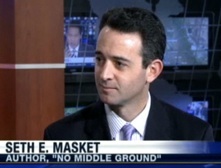
The Inevitable Party:  Why Attempts to Kill the Party System Fail and How they Weaken Democracy by Seth E. Masket is a book I chose based on a New York Times Op-Ed that included the author.  I thought that the editorial had merit and since I have been a proponent of a third party, the title of this book caught my eye.  When I saw it was published by Oxford University Press, I thought it was worth the time to read it.  As I started this blog post, I came to find out that Dr. Masket is the head of the Political Science Department at the University of Denver.  He is also similar in appearance to Paul Ryan:


Started:  3/17/2018
Completed: Never
Recommended by:  loosely, the NYT
Recommendation: Do not waste your time

Words for which I needed help:

endogenous -- having an intellectual cause or origin

Review:

I really wanted to read this book.  It is really annoying me.  It feels like the professor has cherry picked his statistics (for example, one of his early charts shows that $4M less went to a party and that about $4M more went into a 508(c)(4)...he then explains that it is $4M for Senate campaigns and that there was no senate campaign when the reduced amount appears).  His own charts, graphs, and arguments fight against themselves.  Another example, he argues that there was a genuine effort to reform the effects of parties (whom, he asserts, controlled the legislature for their own gain), then points out how unlikely such a genuine reform is (it would require the legislature--controlled by the parties--to vote for something against the party's best interests).  He then goes on to argue that the reform was ineffective (big surprise, if it really wasn't a reform that would hurt party interest).  Instead of concluding that reform cannot be enacted by legislatures controlled by parties, he argues that parties always find a way around he legislation that is enacted.  Well, big surprise, the legislation is written to let that happen.  He then coasts through example after example of how this is true.  I find the lack of logic, the cherry-picking of statistics, and the conclusions unworthy of the Oxford University Press.  So disappointing.

Wednesday, April 4, 2018

Listen Liberal, Thomas Frank


Started:  3/12/2018
Completed: 4/3/2018
Recommended By: The New York Times and Current Affair
Recommendation: Highly Recommended

Review:

It is kind of amazing to me how many books I read recently quote Alexis de Tocqueville (his books, Democracy in America, Vol. 1 and Democracy in America, Vol. 2, are on the shelf to be read).  This particular book also quotes the Federalist Papers right up front.  What a great start to any book that hopes to address politics in the United States.

This book sheds a lot of light on the modern corportacracy that is the current political system.  I have felt things shifting to the right.  Reagan was a hard right conservative in his day and he is solidly left of center today (read his inaugural address--he wanted a representative from Canada and one from Mexico in his cabinet).  This book helps identify how far right Democrats have gone (as though you could not tell when Obama's signature Obamacare is based on a Republican system and has the poor paying money they cannot afford in order to, well, live).  Democrats have consciously and intentionally abandoned the working man.  The concept of a professional class was something new to me and the application of that concept in terms of a meritocracy and the tie between that and income inequality.

Saturday, March 17, 2018

Demagoguery and Democracy, Patricia Roberts-Miller

Demagoguery and Democracy by Patricia Roberts-Miller is a tiny little book that I picked up as a result of reading a portion of it in Salon.

Started:  3/13/2018
Completed: 3/17/2018
Recommendation: Recommended for those familiar with oratory
Recommended By:  Nobody

Review:

This is a fairly technical book written by a pretty impressive author and the attempt is clearly to make the material approachable for most people.  I do not think that people unfamiliar with oratory will find it approachable.  In addition, I think people well-versed in oratory will find it slow-paced and with lots of explanations of obvious things.  I fit in this middle ground--I have studied oratory (and references to Thucydides, Plato, and Aristotle seem welcome), but I am far from knowledgeable in the topic.  This book has a very useful definition of Demagoguery and is so small that it will fit nicely on my shelf next to On Tyranny.  I plan to keep this book and come back to it as needed.

This is a small format book which packs a lot into a small number of pages.  It is smaller than a paperback (perhaps 2/3 the size) and the 120 pages would be far fewer in any other format.  The book has a certain confidence that I find useful and backs up that confidence with reasonable arguments.  I like that!

Thursday, March 1, 2018

What Money Can't Buy, Michael Sandel

What Money Can't Buy:  the Moral Limits of Markets by Michael J. Sandel.  Harvard professor talks about markets?  Count me in!

Started:  2/18/2018
Completed: 3/1/2018
Recommended By: Nobody
Recommendation: Recommended

Review:

So, the idea here is that there are two things all of us are missing in our analysis of free markets.  1) People do not always operate in their own best interest and 2) introducing a market can have an influence over the product(s) commoditized by the market.  There are a couple of other interesting points that follow from these:

  • Markets can corrupt common morality when introduced (e.g. People who are charged a fee for being late to pick up a child at day care start to accept the fee as a payment for being late and the concept of not holding up the teacher is removed).
  • Incentives can backfire (e.g. monetary incentives can be perceived as blackmail instead of as compensation)
  • Money isn't everything (e.g. gifts also indicate that one has thought about another, so there is more than monetary value involved)
The upshot is that markets are not always a good idea.  Private prisons have always been a problem for me because I could not figure out how to generate a monetary reward for rehabilitating prisoners (e.g. private prisons make more money when there are more prisoners, so why rehabilitate?).  I have wondered how to provide a proper incentive to make a private prison work.  The reality is that there is no incentive because rehabilitating prisoners is not associated with money, it is associated with morality and a sense of the public good.  Any effort to "incentivize" prisons so that more prisoners will be rehabilitated will fail because it is not associated with money.  Private prisons will simply fail because having a market for them is nonsensical.  Ditto for schools.  Paying teachers for test scores doesn't work because successful teaching needs to be its own passion and no desire for money can replace that passion.

Read the book and stop hating Capitalism and start hating misplaced markets.

Monday, February 12, 2018

Ratf**ked, David Daley

Ratf**ked:  The True Story Behind the Secret Plan to Steal America's Democracy by David Daley is a book recommended in The Nation.  I got the book out of the library, but kept getting other things to read and even after three renewals I hadn't read it.  I picked it up on audio so that I could listen to it on the way to work...of course, that assumes the government will continue to operate.

Started:  1/24/2018
Completed: 2/12/2018
Recommended By: The Nation
Recommendation: Recommended

Review:

The most recent set of gerrymandering (2010) and its after effects are highly detailed.  Daley really went at it and whether you crow with delight when you hear how Republicans put it to the Democrats or howl with dismay at how politicians chose their own voters (instead of the other way around), this is a remarkably detailed look at what happened.  The story is a good one, but unless you are into minutia, you will likely find the book boring after the first few chapters.  In my opinion (a definite gerrymandering wonk), it is a comprehensive look at gerrymandering and how the republican Red Map program literally has compromised democracy (good if you are a minority Republican afraid of the liberals, bad if you are a progressive worried about the conservatives).

Friday, January 12, 2018

Our Revolution, Bernie Sanders

Our Revolution:  A Future to Believe In by Bernie Sanders is a book I have wanted to read since it came on the market.  I really need to understand his broad positions well before 2020 rolls around.

Started:  11/5/2017
Completed: 1/12/2018
Recommendation: Recommended
Recommended By:  my wife

Review:

Bernie Sandars articulates many views that I have come to independently in Our Revolution.  Part I of the book is how he decided to run for the presidency.  This is interesting, but insanely detailed.  I think I would have benefited from 20 or so pages, not the 200 it was assigned.  For someone who really wants to know Bernie, however, this material is important.  I read the vast majority and skipped the last 20 or so pages as I just got tired of hearing about another meeting where several hundred people showed up and talked about how their lives sucked.  Maybe Bernie's point was that many people have the same frustrations.  If so, he made it resoundingly.

The second part was more about his policies and I found this more interesting.  Unfortunately, this part of the book reads like Bernie speaks.  He makes his point many, many times on many, many issues.  Another 300 pages of excruciating detail.  I probably would have found this wonderful if I already did not know the material.  Over and over I got statistics, charts, and graphs with which I was well familiar.  One area where I learned something really good was in the Native People's section, but it was about 3 pages.

So, this book will tell you why Bernie says what he says.  If you want to know the back story, it is incomparable.  There are a lot of tax raises and service raises.  There are talks of international agreements, partnerships, and scornful international companies.  This is all great.  I really could have used a summary at the back, a table perhaps, that was a balance sheet that showed how the tax increases paid for the service increases.  Maybe some projections on what the anticipated growth rates would be for the economy due to which factor and how that would look over the long time lines (sometimes 15-20 years) in which Bernie thinks.  That would have been awesome even if it had been wrong, because it would have given me some sense of the investment that America should be making in itself.  Maybe, in my retirement, I'll be able to figure all that out and build the table that I think is missing.  Hmmm.

Thursday, December 14, 2017

On Tyranny, Timothy Snyder

On Tyranny:  Twenty Lessons from the Twentieth Century by Timothy Snyder is a book about the potential modern day tyranny brought with the election of Trump.  Timothy Snyder is a professor of history at Yale.

Started:  12/14/1017
Completed:  12/14/2017
Recommendation:  Excellent Read and very quick
Recommended By:  Nobody

Review:

This is a quick book that helps identify the hallmarks of tyranny and offers a series of simple steps that can be taken to combat them.  Simple steps include things like, "Believe in the Truth," which is the answer to things like "alternate facts."  We can do it.

Sunday, May 21, 2017

To Make Men Free, Heather Cox Richardson

To Make Men Free:  A History of the Republican Party by Heather Cox Richardson is a book I picked up in response to an article by the author.  This is part of my effort to understand how Trump was elected and, so, once more into the breech.

Started:  2/24/2017
Completed: 5/21/2017
Recommendation: Highly Recommended
Recommended By: Nobody

Words for which I sought help:

primogeniture -- the right of succession being given to the first born child and inheritance especially in the form of real estate being provided entire.

Review:

It is hard not to agree with the Pulitzer Prize Winners who comment on the back of the dust cover about what a great book this is.  It is remarkably well written and tries hard to understand the threads of continuity in the Republican Party in light of the current manifestation.  The central argument is that Lincoln's party was perverted from a position that all men should be able to rise, to a position that the financial aristocracy should be protected (embodied by the slogan, "Greed is Good").

I liked this book because it tied together the dramatic influence of Roger Ailes in the current Republican party in ways that are probably clear to any historian, but were stunning to me.  It is truly a small group of people who have controlled the Republican party and the return of those same individuals to power under Trump is rather scary.

These leaders of the Republican party--Ailes, Chaney, Gingrich, and, peripherally, Limbaugh--are all pushing a strong pro-business agenda based on image rather than facts.  They truly believe that their approach will work in the absence of evidence that it will and with plenty of evidence that it simply does not work.  They believe this because they live in an alternate world of their own making (hence the reference to things like "alternate facts").  In this world of simplicity (good vs. evil--Reagan wore a white hat) there is no room for the nuances of reality.  This simplified world has simplified "facts" that have no necessity to agree with reality (reference Trump's claims that attendance at his inauguration was a record despite clear photographic evidence that it was much smaller than President Obama's).  Working on the basis of this simplified world (an ideology), Republicans have pursued their agenda and their appeal to voters is based on emotion, not reality.

Thursday, February 23, 2017

Strangers in Their Own Land, Arlie Russell Hochschild

Strangers in Their Own Land:  Anger and Mourning on the American Right by Arlie Russel Hochschild.  This is a book by a Berkeley sociologist that was a finalist for the National Book Award.  Hoping to understand the undercurrent that brought Trump into office.

Started:  2/8/2017
Completed: 2/23/2017
Recommendation: Not recommended
Recommended By:  Nearly everyone

Review:

I found this book depressing.  It is exceedingly well written by a very good sociologist who is desperately trying to understand the forces that eventually brought Trump into office.  Ms. Hochschild does the difficult of work of trying to understand the very people she is trying to help as a liberal.  Her base understanding (and it is more complex than this) is that these people feel like they are standing in line for the American Dream, but minorities, illegal aliens, and, now, refugees are jumping the line and jumping in front of them.  This means that these people view the American Dream as a zero sum game--In order for someone to move forward, someone else must move back.  That is very depressing.

There is a phrase from the New England Council Chamber of Commerce that says, "A rising tide lifts all the boats."  While many Tea Party members would argue that the arguably rising American Economy has not budged their boat at all, the phrase points out that the American Dream is not a zero sum game.  It is possible for us all to improve with nobody else losing.  In fact, this is something that is true of the World economy as well.  President Kennedy understood this and he often borrowed the phrase.

Instead, the Tea Party members have found themselves on the receiving end of ill-advised government interaction with big business.  Somehow, it has become everyman who must support big business and when big business decides to defecate all over everyman--well, that is just the pain that must be endured.  Somehow, the Tea Party bought into the big business zero sum game which says that if big business is going to succeed, it will take it out of the hide of the working man.  Whether this comes from failed labor policies, dubious government handouts, poor regulation, or just the brass balls of the companies does not seem to matter.

Now, this snowflake sheds a tear for the everyman who feels that business cannot be forced to be part of the solution instead of just taking.  Having done that, I closed the book, put it aside, and realized that the Tea Party is pretty darn unreachable.  It is clear that no matter how I engage with them, they will perceive it as a zero sum game in which one of us must lose and the other win.  "Winning," harangues Trump.

The truly sad part is that these people have so much to contribute to society that could be positive.  Their perspective, their suffering, and their intuitions have high value and are needed in our society.  It is, however, anathema for them to cooperate.  They are so very tired of losing.  They want--they need--a win so badly that they will sell the farm to get it.  The same actions that led them into such a self-destructive relationship with big business guides their politics.  How is it possible to work with someone who feels getting dumped upon is just something with which one must deal?  In the end, I cannot value someone more than that person values themselves.

It is very depressing.

Tuesday, February 7, 2017

Hillbilly Elegy, JD Vance


Hillbilly Elegy:  A Memoir of a Family and Culture in Crisis by J. D. Vance was recommended to me by my cousin Michelle and my brother.  Reading this book is an attempt to understand the forces that put Trump in office.

Started: 1/24/2017
Completed: 2/8/2017
Recommendation: well written, good read
Recommended By: cousin Michelle and my brother.

Review:

I feel like I intellectually understand one hillbilly family.  I am unclear exactly how "typical" this family is and I do not feel like I understand what encouraged them to put a billionaire in office.  There is oddly a strong rejection of both the "elites" and the "rich."  There is no doubt that Trump's "rough language," comfort with chaos, and projection of loyalty would appeal to this family.  There is equally no doubt that the family feels abandoned by the working man's party.  As with many proud and strong Americans it also seems clear that this family has no interest in handouts as long as they can be avoided and strongly values both privacy and personal property.  Having established all of this, it isn't clear that any of them voted and, if they did, for whom they voted (although I suspect Trump or the acclaim associated with the book would be very misplaced).

I think it is unfair to ask a single book to explain the last election cycle and so do not expect that of this book.  I think it is fair to add this book to the ungainly tower of analysis that will attempt to understand what happened in terms that will result in a "pivot" or collection of actions that will somehow assuage the pent-up anger that clearly runs through the community described in the book.  The author took a shot at that at the end of the book and he did not seem thrilled with his own ideas.

One thing this book gives:  an appreciation for how deep seated the problems are and how the existing problems are "doubling down" and creating more monstrous problems of their own.  There is no "quick fix" even if it would be well received for this family or its community and it is clear that Trump doesn't have a snowflake's chance of solving it.  It took generations for this community to sour and we haven't even begun to try and help them recover.  It will be generations more before they will be ready to offer any kind of coherent support for any political party.

Like an addict cloying at anything that looks like a fix, this family will surely grasp at anything that looks good without giving anything the kind of consideration that such choices require.  They simply do not have the luxury of time in the midst of their fight for identity and survival.

Tuesday, May 3, 2016

America's Undeclared War, Daniel Lazare

America's Undeclared War:  What's Killing Our Cities and How We Can Stop It by Daniel Lazare is a book that I picked up in the stairwell of a used book store.  I cannot remember the store, but I definitely remember the stairwell and this book on top of an unsorted pile.  I stood in that small stairwell and read the first chapter and was entranced.  While writing this introduction I did a little research on Lazare and found that he is about as left wing as they come.  I seem to be increasingly comfortable with the left wing and my youngest son and I have had long discussions about how we could conceive ways to help Baltimore--a city in trouble by any measure.  When I saw that this book had risen to the top of my reading list, I couldn't help but feel that this was no coincidence.

Started:  1/29/2016
Completed:  5/24/2016
Recommendation: Not Recommended
Recommended By:  Nobody

Words for which I sought help:

bluenose -- a priggish or puritanical person

bosky -- wooded; covered by trees or bushes

burgher -- a citizen of a town or city, typically a member of the wealthy bourgeoisie

cerise -- a bright or deep red color

deracinated -- removed or separated from a native environment or culture

fin de siècle -- French for the end of a century

flivver -- a cheap car or aircraft, especially one in bad condition

Girondist Revolution -- a revolution of moderate republicans (based on the Gironde party in France which was overthrown by the Jacobins during the French Revolution)

Gresham's Law -- when a government overvalues one type of money and undervalues another, the undervalued money will leave the country or disappear from circulation into hoards, and the overvalued money will flood into circulation.

longue durée -- an expression used by the French Annales School of historical writing to designate their approach to the study of history, which gives priority to long-term historical structures over events.

parsimony -- extreme unwillingness to spend money or use resources

patroon -- a person given land and granted certain manorial privileges under the former Dutch governments of New York and New Jersey

preauto -- before the automobile

profligate -- recklessly extravagant or wasteful in the use of resources

quisling -- a traitor who collaborates with an enemy force occupying their country

rentier -- a person living on income from property or investments

rump legislature -- a legislature formed of a part, usually a minority, of the legislators originally elected or appointed to office

sansculotte -- a violent or radical extremist in politics

shibboleth --a custom, principal, or belief distinguishing a particular class or group of people, especially a group of people especially a long standing oneregarded as outmoded or no longer important

stolid -- calm, dependable and showing little emotion or animation

sumptuary -- relating to or denoting laws that limit private expenditure on food and personal items

teleology -- the explanation of things by the purpose they serve rather than by postulated causes

truculent -- eager or quick to argue or fight; aggressively defiant

truncheon -- a short, thick stick used as a weapon by police

yeoman -- a man holding and cultivating a small landed estate; a freeholder

Review:

The author has a distinct point of view and he has marshalled a strong evidentiary pool to support it.  The heart of his argument is that Henry Ford favored enclaves of workers who were isolated in small groups to break labor's power.  Additionally, Ford was racist and an anti-semite so he was in favor of the good life only for WASPs.

The author calls this Fordism and extends the argument across the USA claiming that everyone fell in line.  However, rather than arguing that Ford was a great influencer, he seems to make the case that everyone else thought like Ford.  This seems unlikely, although he is able to put forth quotations from a decent size set of people, it did not feel like this was a pervasive sense of people hating cities in general, it felt more like it was people who were bigots or anti-labor being linked together as anti-city.  If there was, indeed, a huge colection of highly influential people (including presidents) who were expressly anti-city from the 1700s onward, how could cities still exist?

Rather, I think there were people concerned about how to improve what they felt were the negative aspects of the city (consider parks as a play area for children, which the author feels is a waste of space because there would be plenty of space to play in the streets if Fordists weren't so insistent on having a place for environment destroying traffic jams).  The author also cites city planners who tried to make the city feel less claustrophobic as responsible for creating useless and unused spaces as Fordists trying to substitute suburban open spaces for city integration, thus creating barren areas of the city.

The author's arguments do hang together, but it feels artificial.  Even people who start out opposing the city, but come to love it are marked as hypocrites at best or spoilers who only appreciate the good once it is gone.  He does make some good recommendations in the end, although my eye suggests these are just good ideas in general and not simply good for the city.  Some of his recommendations go too far (I think he would get rid of cars entirely) but he is definitely on the right path with many of his ideas.  The problem is that once you get to the ideas, you are so jaded by the author's argument that everyone who does not completely agree with him is "bad" that you are loathe to agree with him.